

 ไทย
ไทย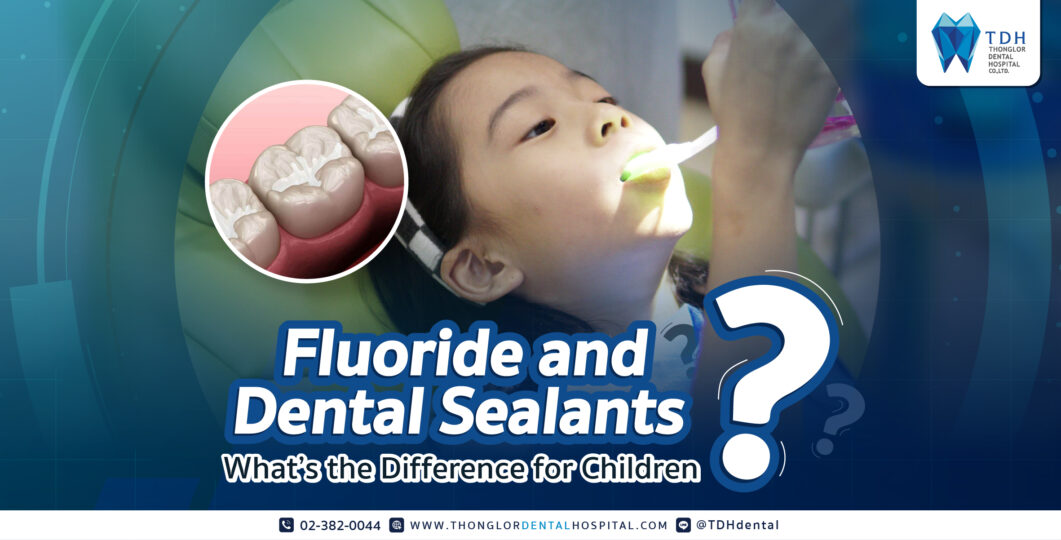
Tooth decay in children can be prevented—especially when proper care begins early. Many parents often ask about the difference between fluoride and dental sealants, and whether both are necessary.
Today, TDH Kids would like to explain in simple terms how these two preventive methods work together to help your child maintain strong and healthy teeth from an early age.
What Is Fluoride and Why Do Children Need It?
Fluoride is a natural mineral that strengthens tooth enamel and reduces the risk of tooth decay. It helps teeth become more resistant to acid attacks from food and bacteria.
Children can receive fluoride from several sources, and it plays an essential role in protecting both baby teeth and permanent teeth.
Important Sources of Fluoride for Children
- Fluoridated Toothpaste
It is recommended to choose toothpaste containing at least 1,000 ppm of fluoride. Children should brush twice daily—once in the morning and once before bedtime—to effectively prevent cavities in their daily routine.
- Professional Fluoride Application at the Clinic
This involves applying high-concentration fluoride by a dentist, typically every six months. It is especially beneficial for children at higher risk of tooth decay or those who frequently consume sugary foods and drinks.
What Are Dental Sealants?
Children’s permanent molars—especially the first molars that erupt around age 6—often have deep and complex grooves. These areas can be difficult to clean thoroughly, even with careful brushing.
As a result, these grooves are common sites for tooth decay.
Dental sealants are thin protective coatings applied to the chewing surfaces of molars. They seal deep grooves to prevent food particles and bacteria from accumulating, significantly reducing the risk of cavities in these vulnerable areas.
Sealants are commonly recommended for first permanent molars when they erupt at around six years of age.
What Is the Difference Between Fluoride and Dental Sealants?
Some families may think fluoride and sealants serve the same purpose, but in fact, they have distinct roles in cavity prevention.
Key Differences Parents Should Know
- Fluoride
→ Strengthens the enamel of all teeth
→ Suitable for both baby teeth and permanent teeth
- Dental Sealants
→ Protect specific areas, particularly the deep grooves of permanent molars
Rather than choosing one over the other, these two methods complement each other. Together, they provide more comprehensive and effective protection against tooth decay in children.
Why TDH Kids Recommends Early Preventive Care
Starting preventive dental care early helps reduce the risk of cavities and minimizes the need for complex treatments in the future. It also allows children to become familiar with dental visits in a friendly and comfortable environment.
Children who visit the dentist before experiencing pain are more likely to have positive experiences, develop confidence, and build healthy attitudes toward oral care that last into adulthood.

 Invisalign®
 Invisalign® first and teen
 Brava™ by Brius
 Metal Braces
 Damon Braces