 Open Daily 10:00 AM – 8:00 PM
 +662-382-0044
 Make Appointment

 ไทย
ไทย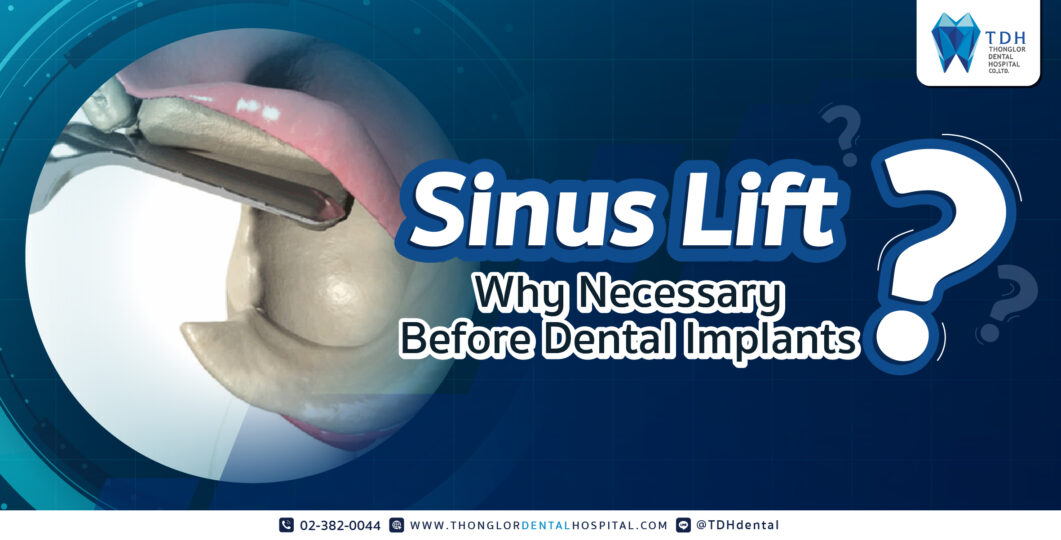
Why Is a Sinus Lift Needed Before Dental Implants?
Placing dental implants in the upper back teeth (upper molar area) requires more than just strong bone. Dentists must also consider the maxillary sinus, which is located very close to this region. If there is not enough bone height available, a procedure called a sinus lift may be necessary before dental implants can be placed safely.
This article will help you understand:
-
What the sinus cavity is
-
What its function is
-
Why some patients need a sinus lift before getting dental implants
What Is the Maxillary Sinus?
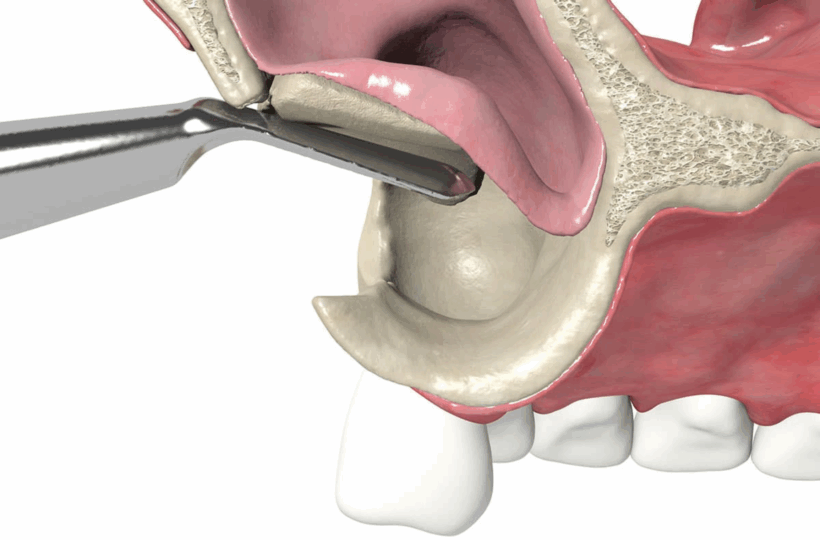
The maxillary sinus is a large air-filled cavity located inside the upper jawbone, positioned above the roots of the upper molar teeth on both sides of the face. It is connected to the nasal cavity and forms part of the sinus system in the skull.
The floor of the maxillary sinus lies very close to the roots of the upper molars. In some cases, after a tooth has been missing for a long time, the sinus cavity may gradually expand downward into the space where the tooth root and bone once were. As a result, the bone in that area can become thinner and insufficient for dental implant placement.
What Is the Function of the Maxillary Sinus?
The maxillary sinus serves several important functions in the body, including:
-
Reducing the weight of the skull, making the head lighter
-
Helping regulate the temperature and humidity of the air before it enters the lungs
-
Contributing to voice resonance, which affects how our voice sounds
-
Maintaining air pressure within the nasal cavity
Although the sinus plays an important role in the respiratory system, its location close to the upper molars means it must be carefully considered when planning dental implant treatment in this area.
Why Do Some People Need a Sinus Lift Before Dental Implants?
When planning dental implants in the upper molar area, one important factor is having sufficient bone height and thickness to properly support the implant.
In general, the standard requirements include:
-
Dental implant length: approximately 8–10 mm
-
Required bone height: ideally 10–12 mm
-
Safety margin: about 2 mm of bone above the tip of the implant to ensure safe placement and avoid penetrating the sinus cavity
If the available bone height is insufficient due to bone loss or sinus expansion, a sinus lift procedure may be required to increase the bone volume before placing the dental implant.
Common Reasons Why Some Patients Need a Sinus Lift
One of the most common reasons patients require a sinus lift is when a tooth in the upper back area has been missing for a long time.
This can affect dental implant placement in several ways:
-
Bone resorption: After a tooth is extracted and left untreated for a long period, the bone in that area gradually shrinks or resorbs, reducing the available bone needed to support a dental implant.
-
Sinus pneumatization: Over time, the maxillary sinus may expand downward into the empty space, further decreasing the bone height in the upper jaw.
Because of these changes, there may not be enough bone to securely place a dental implant, making a sinus lift procedure necessary to rebuild the bone and create a stable foundation for the implant.
Insufficient Bone for Dental Implant Placement
If there is not enough bone available in the upper jaw, placing a dental implant may become unstable and less predictable. Inadequate bone height can also increase the risk of the implant penetrating into the maxillary sinus.
In such cases, a sinus lift procedure is often recommended to increase the bone volume and create a stable and safe foundation for dental implant placement.
Sinus Lift Procedure
A sinus lift is a dental procedure in which the sinus membrane is gently lifted upward, and bone graft material is placed beneath the sinus cavity. This helps increase the height and volume of bone in the upper jaw, creating enough support for dental implant placement.
This is a commonly performed and well-established procedure in dental implant treatment. When carried out by an experienced dental specialist, a sinus lift is considered safe and predictable, and there is generally no need for concern.
Important Considerations About the Maxillary Sinus
Before performing dental implants in the upper back teeth area, several precautions should be taken:
-
Proper evaluation with X-rays or CBCT scans is essential before treatment planning.
-
Avoid perforation of the sinus membrane during the procedure.
-
Patients with chronic sinusitis should receive treatment first before undergoing implant surgery.
Careful planning from the beginning helps ensure that dental implant treatment is safe, stable, and long-lasting.

 Invisalign®
 Invisalign® first and teen
 Brava™ by Brius
 Metal Braces
 Damon Braces