 Open Daily 10:00 AM – 8:00 PM
 +662-382-0044
 Make Appointment

 ไทย
ไทย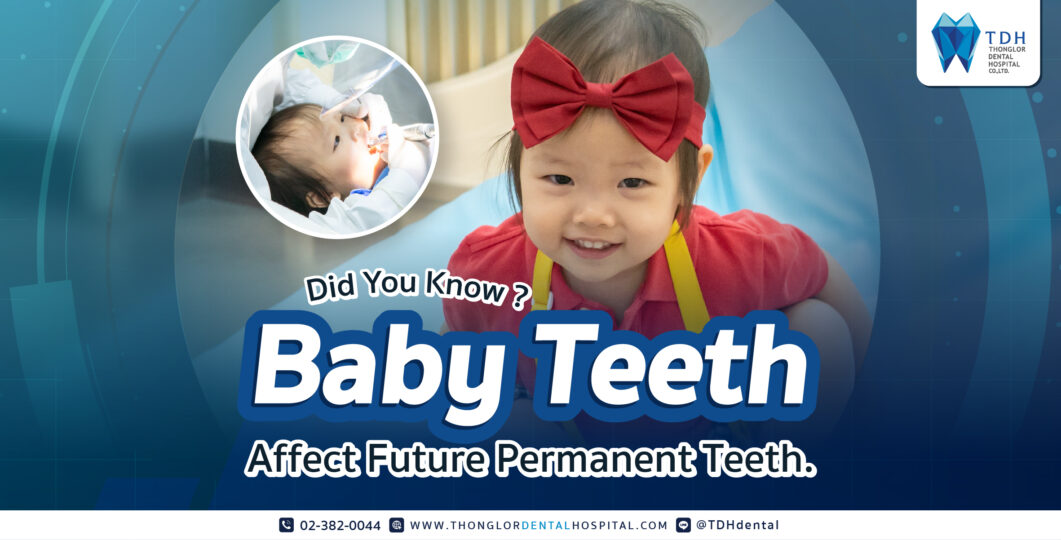
How Important Are Baby Teeth?
The Starting Point of Healthy Permanent Teeth
Many people believe that baby teeth will eventually fall out, so they do not require much care. However, in reality, baby teeth play a very important role in a child’s oral development and can significantly affect how permanent teeth grow in the future.
When baby teeth are properly cared for from an early age, children are more likely to develop strong, well-aligned permanent teeth and maintain good oral health in the long term. 🦷✨
What Are Baby Teeth and When Do They Erupt?
Baby teeth, also known as primary teeth, are the first set of teeth that develop in children. They usually begin to erupt at around 6 months of age and continue to appear until a child has a full set of 20 baby teeth, typically by the age of 2 to 3 years.
Although baby teeth will gradually fall out and be replaced by permanent teeth between the ages of 6 and 12, the time when baby teeth are present in the mouth is a crucial stage for a child’s oral and overall development.
Why Are Baby Teeth Important?
1. They guide permanent teeth into the correct position
Baby teeth act as natural placeholders for permanent teeth. If a baby tooth is lost too early—due to tooth decay or an accident—it may cause permanent teeth to erupt in the wrong position, leading to problems such as crowding, crooked teeth, or bite misalignment.
2. They help children chew food effectively
Healthy baby teeth allow children to chew and break down food properly, which supports good nutrition and healthy physical growth.
3. They support speech development
Teeth play an important role in pronunciation. If children lose baby teeth too early, it may lead to speech difficulties or unclear pronunciation.
4. They build the foundation for lifelong oral health
Children who learn to care for their teeth from an early age are more likely to develop good oral hygiene habits that continue into adulthood.
Common Problems with Baby Teeth
One of the most common issues in young children is Early Childhood Caries (ECC), or tooth decay in baby teeth. This condition can occur for several reasons, such as:
-
Drinking milk before bedtime without brushing teeth afterward
-
Frequent consumption of sweets and sugary drinks
-
Improper toothbrushing habits
-
Not taking the child for regular dental check-ups
If tooth decay is left untreated and becomes severe, it may lead to tooth pain, infection, or premature loss of baby teeth, which can affect a child’s oral health and the development of permanent teeth in the future.
When Should Children First Visit the Dentist?
Pediatric dental associations recommend that a child’s first dental visit should take place:
-
Within 6 months after the first tooth erupts, or
-
No later than 1 year of age
Visiting the dentist at an early age helps to:
-
Detect dental problems at an early stage
-
Provide parents with proper guidance on caring for their child’s teeth
-
Help children become familiar with the dental clinic environment, reducing fear or anxiety about dental visits in the future
How Parents Can Take Care of Their Child’s Baby Teeth
1. Brush teeth twice a day
Use a fluoride toothpaste in an amount appropriate for the child’s age.
2. Avoid giving milk before bedtime without brushing afterward
This helps reduce the risk of tooth decay caused by milk sugars left on the teeth.
3. Limit sweets and sugary drinks
Frequent sugar consumption increases the risk of cavities in baby teeth.
4. Schedule regular dental check-ups every 6 months
Regular visits allow the dentist to monitor dental development and detect potential problems early.
Gentle Pediatric Dental Care at TDH Dental
At TDH Dental, we understand that dental care for children requires both professional expertise and a deep understanding of children’s behavior.
Our team of dentists provides gentle, friendly, and child-focused care, helping young patients feel comfortable and relaxed during their visit. This positive experience encourages children to feel confident about seeing the dentist and helps build healthy oral care habits from an early age.
Starting to care for baby teeth today lays the foundation for strong, healthy, and beautiful smiles in the future.

 Invisalign®
 Invisalign® first and teen
 Brava™ by Brius
 Metal Braces
 Damon Braces